- Home
- Leak Detection
Leak Detection Benoni
Leak detection Benoni jobs begin with proof that water is escaping, then a search with listening and thermal equipment, so a wall or paving is opened at one marked spot and nowhere else. A pool that keeps losing water has its own page: pool leak detection.
Leaks Found Without Taking the House Apart
Every search starts by closing off sections of pipe, so it narrows before any equipment comes out.
-
Underground supply pipes
The line from the meter to the house, under lawns, driveways and paving, traced and pressure tested.
-
Leaks inside walls
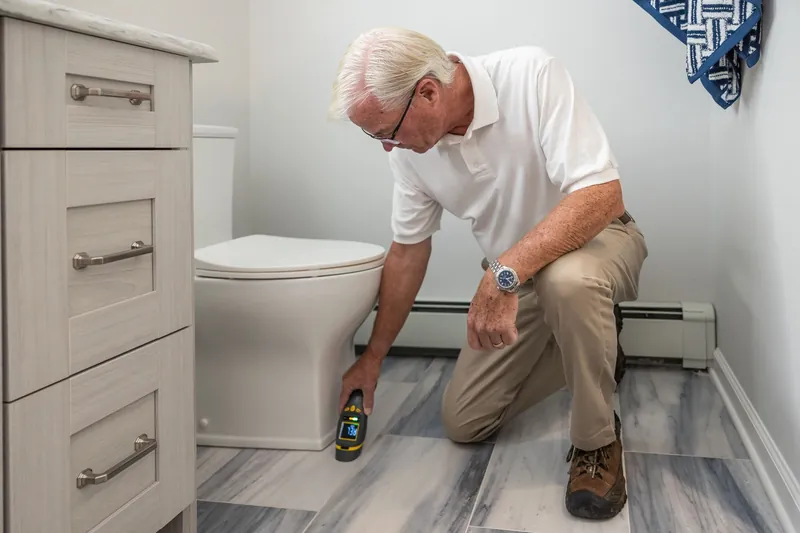
Damp patches, lifting paint and stains near bathrooms and kitchens, located with a thermal camera and a moisture meter.
-
Hot water lines under floors
Warm spots on tiles from a hot pipe in the slab, followed back towards the geyser.
-
Shower and bath leaks
Mixers, wastes and grout that let water behind the tiles, told apart before a tile is lifted.
-
Cisterns that never stop
Flush valves and inlet valves that run into the pan all day, a quiet leak that only shows on the bill.
-
Unexplained water bills
A jump in use with nothing visibly wet, worked through section by section until the water is accounted for.
On Dolomitic Ground, a Leak Is Also a Ground Problem
The City’s own explanation of sinkholes starts with leaking pipes, and that changes how long a leak can safely be left.
Ekurhuleni says around 52% of its land is dolomitic. In a 2022 warning to residents, the City said sinkholes are caused mainly by stagnant water and constant water pipe leaks, which wash soil away underground. It is replacing old concrete pipes on its own network with more flexible ones that cope better with unstable ground. The private pipes on your erf get no such upgrade unless you arrange it.
The City’s 2015 planning reports give regional figures. They class 68% of Region C, which takes in the northern part of Benoni along with Daveyton and Etwatwa, as dolomitic land, and 60% of Region D, which covers Benoni, Brakpan and Springs. The Region D report also says its ground with no major constraints lies mostly towards the west, the side Benoni is on. So no regional figure tells you what is under a particular house, and you do not need to know that to act on a leak.
Dolomite is not the whole story either. In November 2019 the City explained a sinkhole on Snake Road: a broken stormwater pipe had leaked, washed away the layers under the road and left a cavity beneath the tar. The City also said that area is non-dolomitic. Moving water carries soil on any ground, and a buried pipe that leaks for months does the same thing on a smaller scale, under a driveway, a path or the edge of a slab.
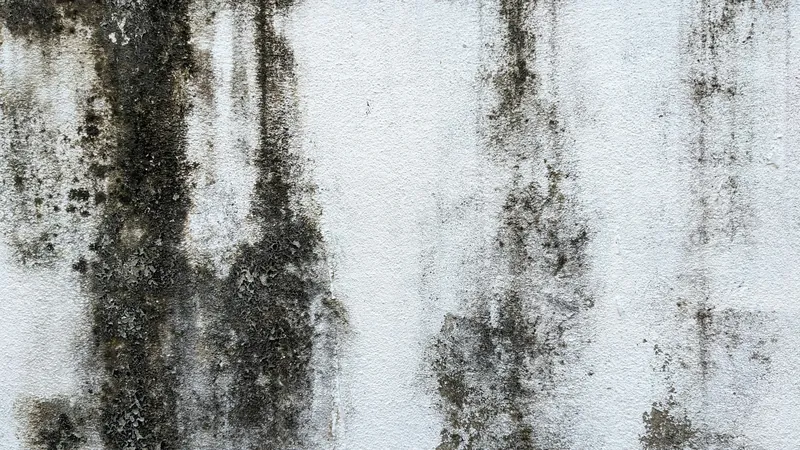
The warning signs the City lists are one side of a house tilting, the ground sinking slightly, and depressions or unexplained holes in the yard. Those are late signs, and water has often been moving for a while before they show. The earlier ones are smaller: a paving block that rocks underfoot, a strip of lawn that stays green through a dry spell, a damp line low on a wall or a crack opening across a floor. Any of those near a water pipe deserves a leak test before it deserves a builder.
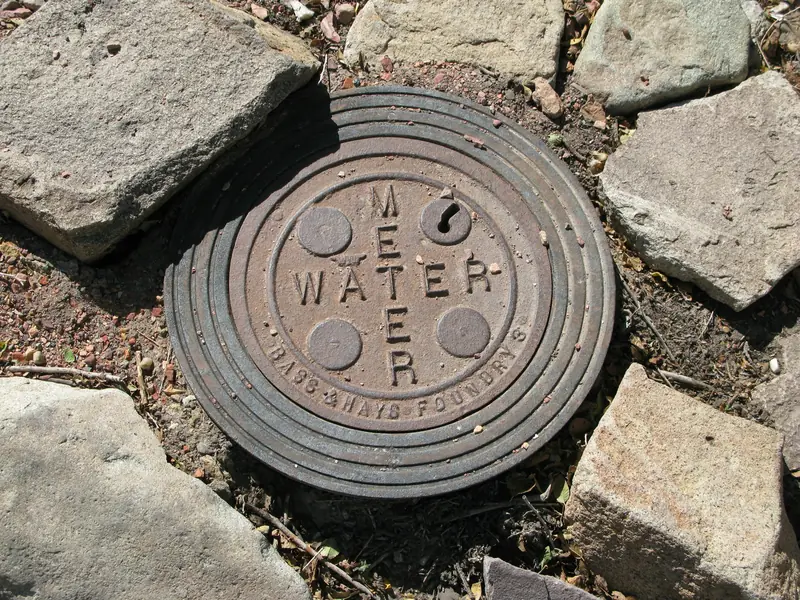
Waiting costs money as well. Ekurhuleni maintains the water mains up to the meter, and all piping from the meter onto the property is the owner’s or tenant’s responsibility. Under the City’s draft by-laws, no consumer is entitled to a rebate for water wasted through undetected leakage, so every litre lost on your side is billed whether you knew about it or not. A leak found early usually means one small opening and one new fitting. Left to run, it adds to the bill every month and keeps working at the ground beneath it.
Do not wait for the ground to move. If the bill or a damp patch says water is escaping, have the leak located while the repair is still one small opening.
A Careful Search Keeps the Repair Small
On a leak job the biggest cost is often the hole, not the pipe. These four rules are aimed at the hole.
Located before anything is opened
No wall is chased and no paving lifted until the leak has been pinpointed and the spot shown to you.
Making good priced up front
The size of the opening, and how the tiles, plaster or paving will be put back, are written on the quote.
Proved on the meter
After the repair, every tap is closed and the meter watched with you, so you see for yourself that the leak has stopped.
Findings an insurer can read
Where the leak was, how it was found, photos of the spot, and an invoice split between the insurer and you.
Three Leaks That Hide Well
Each one shows itself somewhere other than where the water is escaping.
-
A warm patch on a tiled floor
- What it usually means
- A hot water pipe leaking in or under the floor slab, somewhere between the geyser and a tap.
- What it needs
- The hot side isolated at the geyser to confirm it, then a thermal camera to follow the pipe to the leak.
-
Damp low on a wall beside a shower
- What it usually means
- A leaking mixer or shower waste behind the tiles, or failed grout letting water through.
- What it needs
- The supply pressure tested with the shower off, then water run straight into the waste, so the two are told apart before any tile comes off.
-
Paving sinking along one line
- What it usually means
- Water washing out the sand under the paving, from a buried supply pipe or a cracked drain beneath it.
- What it needs
- The supply line pressure tested and, if it holds, a CCTV drain inspection of the drain under the dip.
The Leak Is Proved, Then Pinpointed, Then Opened
Each step narrows the search, so the hole at the end is as small as the leak allows.
- 1
Send the form
Say what you have noticed and where. A meter reading or a photo of the bill helps.
- 2
The call back
Questions about the meter, the bill and any damp, followed by the call-out fee and a time to come out.
- 3
Isolate and locate
Sections of pipe are closed off and pressure tested in turn. Listening, thermal or tracer gas equipment then finds the spot, which is marked and shown to you.
- 4
Quote, repair, re-test
The opening, the repair and the making good are quoted in writing. After the repair, the line is tested again with you there.
What Benoni Homeowners Ask About Hidden Leaks
The cost first, then how a leak is found and who deals with what.
-
How much does leak detection cost in Benoni?
Price guides from 2025 and 2026 put electronic leak detection at roughly R1,200 to R4,500, acoustic work at R850 to R2,500, thermal imaging at R1,500 to R3,500 and tracer gas at R2,000 to R4,500. Those are market ranges, not our rates.
-
How is a hidden leak found without breaking walls or paving?
Acoustic equipment hears water escaping from a pressurised pipe through floors, walls and ground. A thermal camera shows the warm or cool trail a leak leaves, which suits hot water lines. A line too quiet to hear is filled with harmless tracer gas, detected where it rises through the surface.
-
Why has my water bill jumped when nothing looks wet?
First check the bill’s reading against the meter, to be sure it is an actual reading. If use really has risen, a cistern running into the pan is a common silent cause, then buried pipes and leaks under floors, which a meter test will show.
-
How do I test my water meter for a leak?
Close every tap and stop anything that uses water, including irrigation and pool top-ups, then watch the meter or its small leak indicator for 15 minutes. If it moves, water is escaping after the meter, and closing the valve where the pipe enters the house shows whether the leak is inside or under the garden.
-
Who do I report sunken ground or a possible sinkhole to?
The City, on the numbers published for sinkhole reports in Ekurhuleni: 0860 543 000 and 011 999 4666. Keep people and cars away and do not fill the hole. If a water pipe runs nearby, close your stopcock and have that line tested, as a leak could be feeding it.
-
I rent the house. Who arranges the leak detection?
Check the lease, which usually says who repairs what. Often the owner arranges and pays for plumbing repairs, and the tenant reports problems promptly in writing. Either of you can send the form, saying who will pay, so the quote goes to the right person.
-
Does a leak under the floor slab mean breaking up the floor?
Not always. Once the leak is pinpointed, the floor can be opened at that spot, or the buried section abandoned and a new pipe run through a wall or the roof space. Where both are possible, the quote sets out each and why one is recommended.
-
Does household insurance pay to find a leak?
Some policies pay to locate a leak and open up to reach it, often called trace and access, and many cover the damage caused. The water lost and the worn pipe are often excluded, so check the wording or ask the insurer before the search starts.
Have a Leak Found in Benoni
Send the form with what you have noticed. You hear the call-out fee on the call back, before a visit is booked.