- Home
- Emergency Plumber
Emergency Plumber Benoni
Emergency plumber Benoni calls start with getting the water off, not with a van on the road. The call back after the form begins with your stopcock, then the call-out fee in rand, and the permanent repair is quoted in writing before anyone starts it.
Plumbing Emergencies, Isolated Before They Are Quoted
And one that looks like a plumbing emergency but belongs to the City, which is explained further down.
-
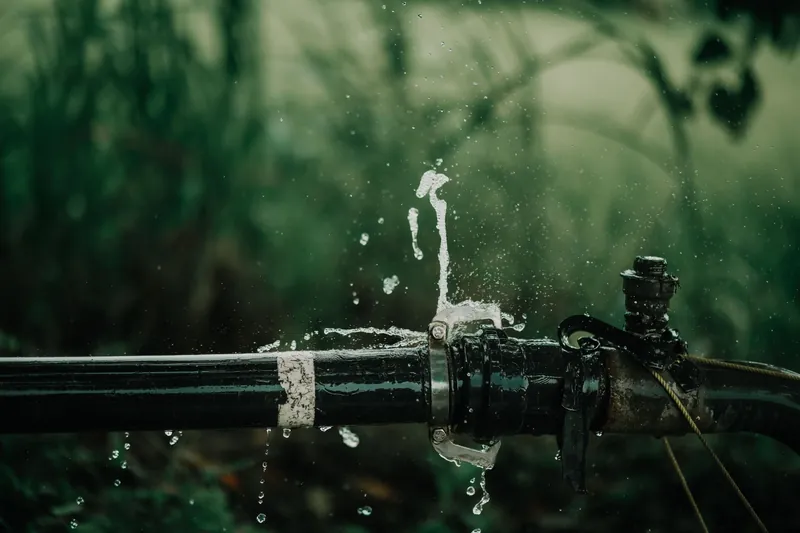
Burst pipes
A split copper or plastic line in a wall, a ceiling or the garden, isolated and cut out, then replaced with a matching section.
-
Burst or leaking geysers
Water through the ceiling from the roof space. The geyser is isolated and the cause written down for the insurer. See geyser repair.
-
Water that will not shut off
A stopcock seized open, a tap that spins without closing, or a cistern valve stuck so the overflow never stops.
-
Sewage backing up
A toilet, shower or yard gully overflowing. The line is cleared and the cause traced along it, not just pushed through.
-
Flexi-hoses that let go
The braided hoses under basins and toilets fail without warning, and often when the water comes back after an outage.
-
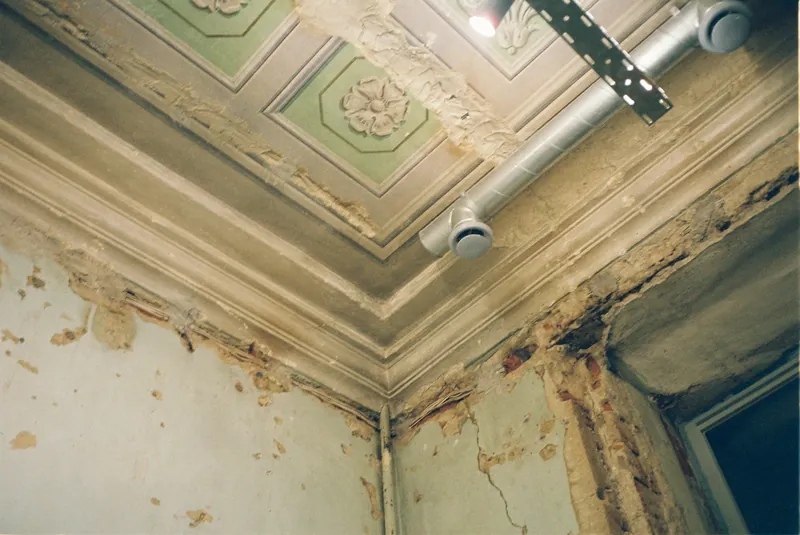
Water in ceilings and walls
Water appearing where no pipe is visible. Stopped first, traced second, with any opening kept as small as it can be.
First Question in a Burst: Which Side of the Meter Is It On?
The answer decides whether you need a plumber at all, and how to stop the water while you wait.
Ekurhuleni maintains the water mains up to your meter. Everything from the meter into the house, including the pipe under the lawn, the stopcock, the geyser and every tap, is the owner’s to repair. The City’s draft water by-laws draw the same line, at the downstream end of the City’s supply valve and meter.
That line comes up a lot in Benoni, because the City’s side gives trouble too. In April 2025 the Ward 28 councillor reported ten burst water pipes in Farrarmere in two weeks, and in Benoni Agricultural Holdings a leak at the corner of Birch Road and Hazel Road had been running for six months by the time the Benoni City Times reported it. When water is pouring from the street side of your meter, the call is to the City on 0860 543 000, and paying a plumber to look at it is money wasted.
Your side is different. Nobody from the City repairs a burst between the meter and the house, and the meter itself is off limits: the City’s rules forbid anyone unauthorised from tampering or interfering with it. What you can do is close your own stopcock. There is usually one beside the meter at the boundary, and the City’s draft by-laws require owners to fit an isolating valve on the service pipe within 1.5 metres inside the boundary.
If you cannot find yours, or it will not turn, say so when the plumber phones back. A stopcock that has not been turned in years often seizes, and a seized stopcock is how a small leak becomes a flooded floor. Closing it is not a repair, but it turns an emergency into a job that can wait an hour for the right parts.
The meter is also the quickest test of what failed when supply has just come back after a shutdown. That can take a while: before Rand Water maintenance in December 2025, the City warned that pressure and supply could take up to two weeks to return to normal, especially in high-lying areas. Close every tap in the house and watch the dial. If it is still turning, the leak is on your side, whatever happened in the street.
Find your stopcock today and check that it turns. Water from the street side of the meter is the City’s to report; water from the house side means closing the stopcock and sending the form.
Urgent Should Not Mean a Blank Cheque
The urgency is yours. These four rules stop it from becoming a price you never agreed to.
Fee before dispatch
The call-out fee, and an after-hours rate if one applies, is stated on the phone before a plumber leaves.
Make safe, then quote
Stopping the water comes first. The permanent repair is quoted before it starts, so urgency never buys a job you did not agree to.
Photos as the job goes
Before, during and after, taken on the day for the insurer rather than pieced together later.
You can say no
Turn the repair quote down and you pay the call-out and any make-safe work you agreed to, and nothing else.
Behind Most Burst-Pipe Calls
Three faults that account for a lot of emergency plumbing, and what each one needs.
-
Water through the ceiling below the geyser
- What it usually means
- The geyser itself, or its valves and drip tray overflowing in the roof space.
- What it needs
- The geyser off at the board, the water isolated, and a look before anyone assumes the cylinder has burst.
-
A wet patch in the lawn that keeps spreading
- What it usually means
- A buried supply pipe leaking somewhere between the meter and the house.
- What it needs
- The leak located before any digging, then a section of pipe replaced.
-
A hose burst under a basin or toilet
- What it usually means
- A braided flexi-hose that has perished, kinked or been overtightened.
- What it needs
- A new hose and, if they keep failing, a check of the pressure reaching the house.
The Water Stops First, the Quote Comes Second
Four steps, in the order a burst actually needs them.
- 1
Send the form
Say what is happening and in which suburb. A photo can wait for the call.
- 2
The call back
The first questions are about stopping the water. Then the call-out fee in rand, and a time.
- 3
Make safe, then find the cause
The leak is isolated and the cause found. The permanent repair is quoted in writing before it starts.
- 4
Repair and test
The repair is tested with the water back on, and you get an invoice an insurer can work with.
What People Ask When the Water Will Not Stop
Starting with the cost, because that is the first worry on a bad night.
-
How much does an emergency plumber cost in Benoni?
Price guides from 2025 and 2026 put after-hours call-outs at roughly R750 to R1,500, against R450 to R950 in normal hours, and after-hours labour at 1.5 to 2 times the day rate. Those are market ranges, not our rates. The figure that counts is the one you are told on the call back.
-
Where is my stopcock?
Usually in a small box or pit beside the meter, in the pavement or garden. Many houses also have a valve where the supply pipe enters the building, and one on the cold feed to the geyser. If a valve will not turn, do not force it with a tool, because a snapped spindle makes things worse.
-
Should I switch the geyser off?
If hot water is leaking, yes, at the distribution board. A geyser that keeps heating while its water drains away can burn out its element, turning one repair into two.
-
Will my insurance pay for an emergency call-out?
Many household policies cover a burst geyser or pipe and the damage it causes, less an excess, but terms differ and some insurers send their own panel plumber. Phone the insurer early and ask whether you may appoint your own. If so, this call-out’s paperwork is set up for the claim.
-
Can the leak be stopped without breaking anything?
Usually, yes, at a valve. If the permanent repair needs a wall chased or a ceiling board taken down, the quote says so, with how it will be closed up.
-
My ceiling is bulging with water. What should I do?
Keep everyone out from under it and switch off the lights and plugs in that room, because a bulging board holds a lot of water and can come down suddenly. Once the supply is off, a small hole at the lowest point, over a bucket, drains it in a controlled way.
-
Do you deal with sewage overflows?
Yes, on your property, up to the municipal connection. If the overflow is coming from a manhole in the street, report it to the City: after a pump station failure in Brentwood Park in 2025, the City said sewage leaks must be attended to within 48 hours.
-
Can I send the form at night?
Yes, the form works at any hour. The call back comes when a plumber is available, and any after-hours rate is stated before a visit is agreed.
Report a Plumbing Emergency in Benoni
Close the stopcock if you can, then send this. Say what is happening and keep your phone close.